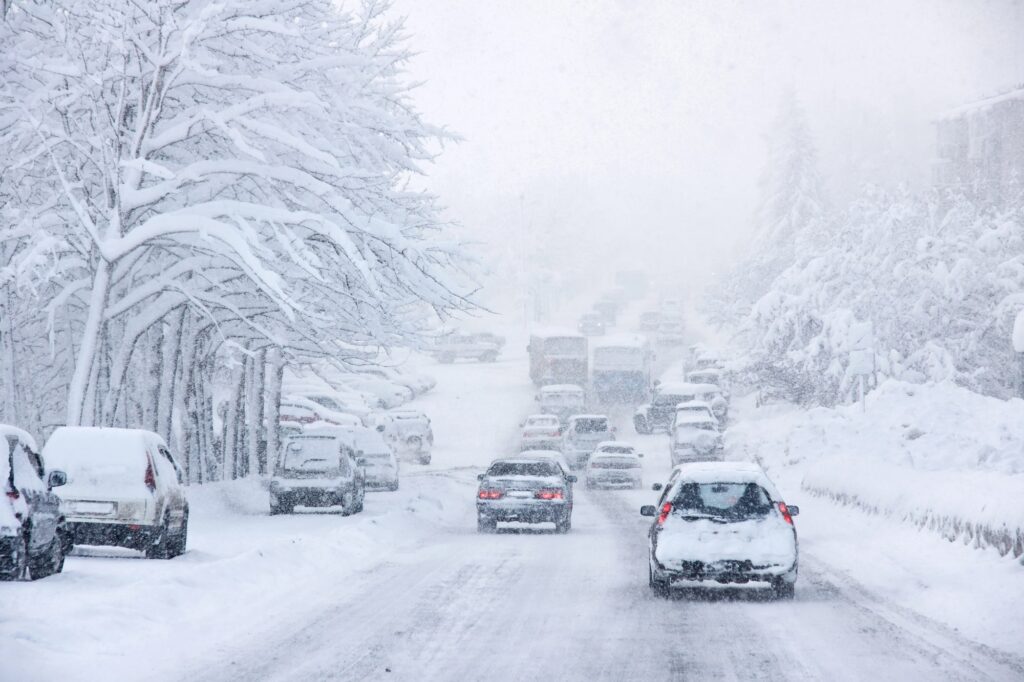
Sitting at more than 4,000 feet in elevation in the Klamath Basin, Klamath Falls sees a winter driving season that much of Oregon does not. Freezing overnight temperatures, black ice on bridges and overpasses, and sudden snow squalls off the surrounding mountains all combine to make winter driving here genuinely different from driving in the Willamette Valley.
Why Elevation Changes the Driving Season
Klamath Falls sits high enough that winter weather arrives earlier and lingers longer than in lower-elevation parts of the state. Roads that look clear can hide black ice in shaded stretches or on bridge decks, where the surface freezes before the surrounding pavement does. A driver who takes a curve at a normal speed on a seemingly dry road can lose control entirely once the tires hit that hidden ice. Local drivers often learn to watch for the telltale dull sheen that separates black ice from ordinary wet pavement, but visitors and out-of-town commuters frequently miss that warning sign entirely.
How Oregon’s Basic Speed Rule Applies in Winter
Oregon law does not simply require drivers to stay under the posted limit. Under ORS 811.100, Oregon’s basic speed rule requires drivers to travel at a speed that is reasonable and prudent given the actual conditions, including weather and road surface, regardless of the posted limit. Driving the speed limit on an icy road can still be a violation of this rule if that speed was not safe given the conditions at the time.
Common Winter Crash Scenarios in Klamath Falls
Certain patterns show up again and again once temperatures drop. A Klamath Falls car accident lawyer regularly sees cases involving:
- Black ice on bridges and shaded rural stretches
- Sudden whiteout conditions during snow squalls off the mountains
- Vehicles sliding through intersections after failing to account for stopping distance
- Agricultural equipment sharing the road during harvest season transitions into winter
Each of these scenarios raises different questions about what a reasonable driver should have anticipated given local conditions.
Why Local Knowledge Matters in These Cases
Someone unfamiliar with the Klamath Basin might reasonably argue that a crash was simply unavoidable given sudden weather. But drivers who live and work in the area are generally expected to know which stretches of road freeze first and which intersections require extra caution during winter months. That local expectation becomes an important factor in determining whether a driver acted reasonably or ignored conditions they should have anticipated. A Klamath Falls car accident lawyer often gathers testimony from residents familiar with a specific stretch of road to help establish what a careful driver in that exact spot should have known.
How Weather Data Supports a Winter Crash Claim
Weather conditions at the exact time and location of a crash can be documented after the fact through official records, and that documentation often becomes central to a winter crash case. Establishing whether black ice, active snowfall, or reduced visibility existed at the moment of impact helps show whether a driver violated the basic speed rule, and it can counter an insurer’s attempt to blame road conditions alone for what happened. Photographs taken at the scene, dashcam footage, and even nearby business surveillance can all help pin down exactly what conditions looked like in the minutes before a crash.
Getting Help After a Winter Crash
Winter crashes in the Klamath Basin carry their own set of legal questions, from what a reasonable driver should have known about local road conditions to how weather evidence gets documented after the fact. Andersen & Linthorst has represented injured clients across Klamath Falls through many winter seasons, and understanding how these local conditions apply to Oregon’s speed and negligence rules often shapes how a case gets built. If you were hurt in a winter crash, reach out so these details can be gathered while the evidence is still fresh.


